
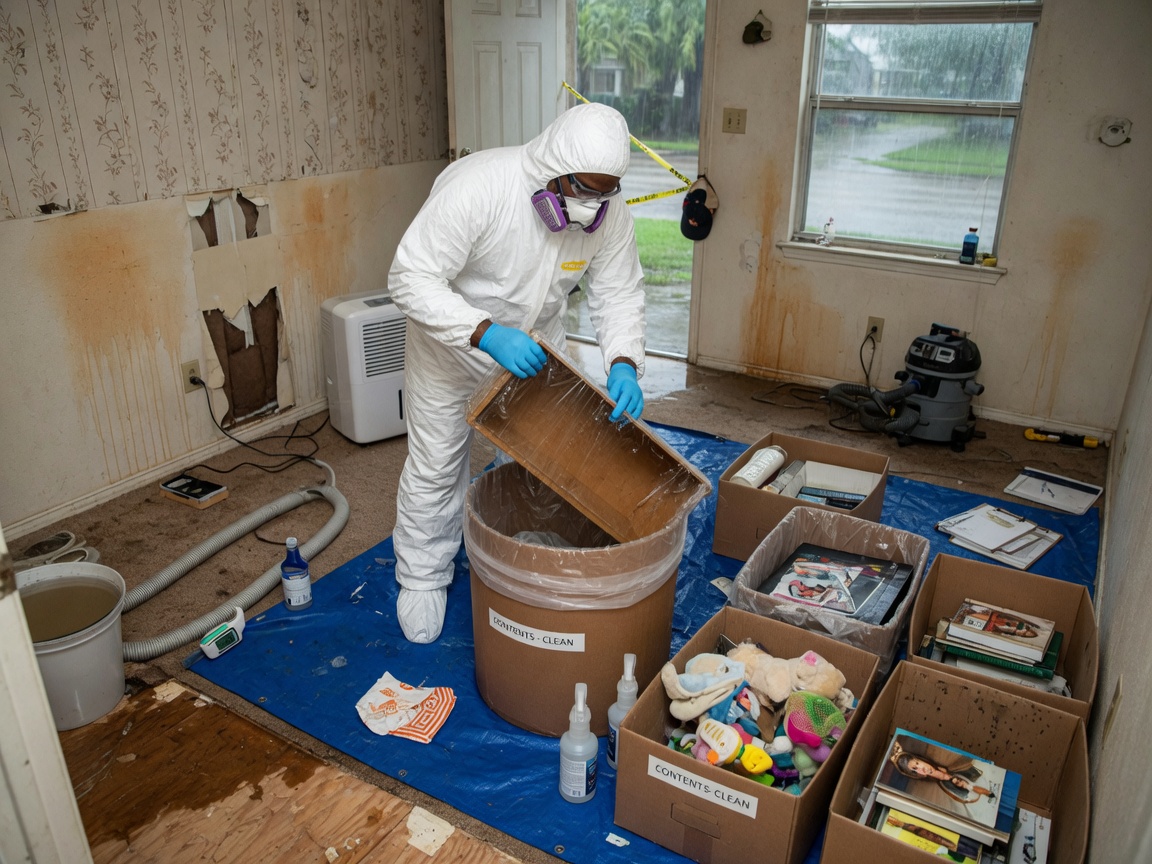
Greater Hobby Area sits south of downtown Houston along Telephone Road and Broadway Street, where many 1950s and 1960s single-family homes sit on flat lots near William P. Hobby Airport. Unattended death cleanup here often involves older wood-frame houses with slab foundations and limited side access, so crews must navigate narrow driveways and shared fences while containing odors that spread quickly in the subtropical humidity.
Hot summers and mild winters in Harris County accelerate decomposition when air conditioning fails or windows stay closed. In neighborhoods around Glenbrook Golf Course and Hobby Elementary, technicians routinely handle carpet removal and subfloor treatment after fluids migrate through older flooring. Service calls also reach nearby streets feeding into Pearland and the airport industrial corridor where shift workers may go unnoticed for days.
Response teams stage equipment on major corridors like Almeda Road to reach both residential blocks and the occasional multi-unit property tucked behind commercial strips. Work stays focused on full removal of affected materials rather than masking, especially when high moisture levels from summer storms have already set into drywall and insulation.
Around Greater Hobby Area
We regularly work near:
- 📍William P. Hobby Airport
- 📍Glenbrook Golf Course
- 📍Hobby Elementary School
- 📍Telephone Road
- 📍Broadway Street
- 📍Almeda Road
Unattended Death Cleanup in Greater Hobby Area — Local Notes
- •Many Greater Hobby homes built on concrete slabs in the 1960s allow fluids to wick under walls, requiring removal of base plates and sometimes adjacent cabinetry.
- •Flat terrain and poor drainage near Hobby Airport mean standing water after heavy rain can mix with biohazards, extending drying times before ozone and HEPA work can finish.
- •Older HVAC systems common in the area often recirculate odors through shared ductwork in duplexes and triplexes along Telephone Road.
- •Proximity to the airport brings frequent low-altitude flights that can carry smell complaints to neighboring blocks faster than in inland neighborhoods.