
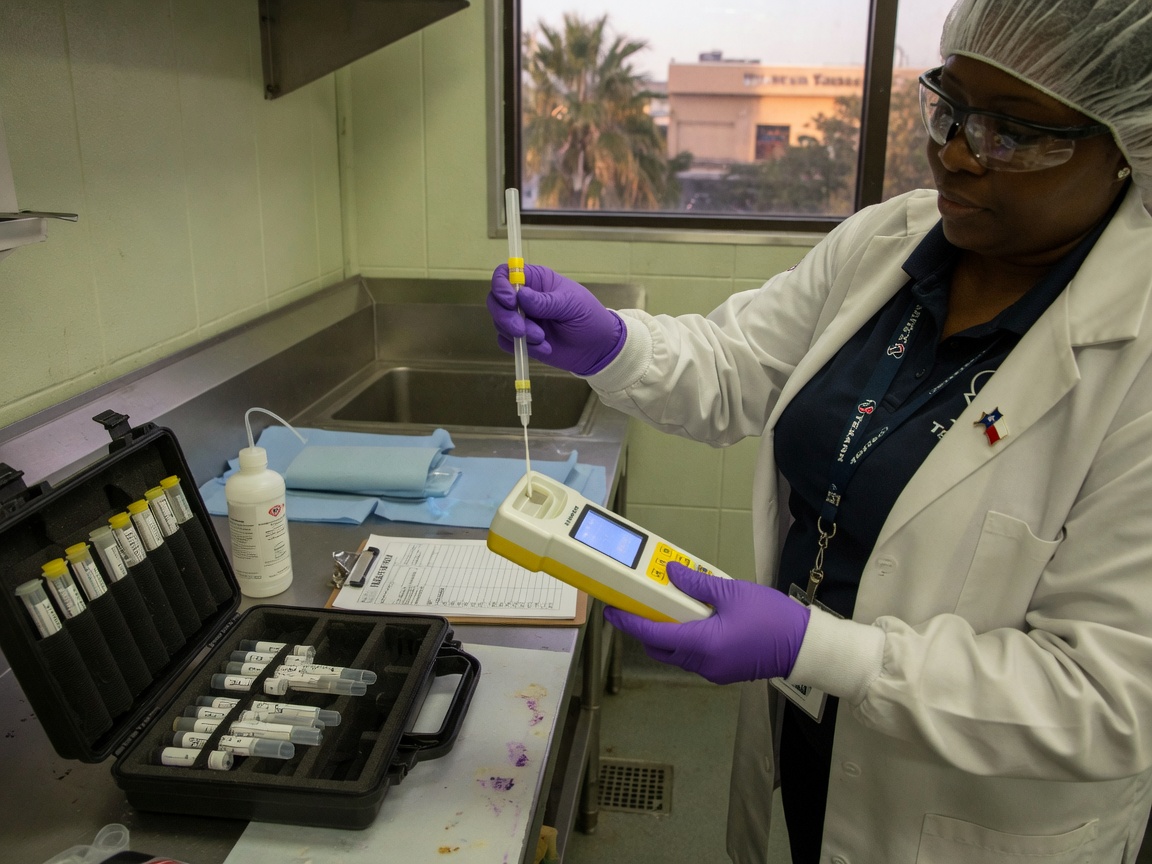
Houston's subtropical climate accelerates decomposition during hot humid summers, leaving microscopic residues that standard cleaning often misses in older housing stock found in the Heights and Montrose. ATP bioluminescence testing uses luciferase enzymes to detect adenosine triphosphate from organic matter on surfaces, in subfloors, and within wall cavities common to pre-1970s homes throughout Harris County. Technicians must account for high ambient humidity that can inflate readings, requiring controlled sampling protocols and multiple calibration checks on-site.
In River Oaks and Midtown properties with mixed tile, hardwood, and carpet, edge cases include porous materials that trap fluids below visible layers, especially after flooding events that affect soil moisture in low-lying areas. Testing follows Texas biohazard handling guidelines without claiming certification, focusing on swab collection from high-risk zones near HVAC returns and plumbing chases that spread odors in Downtown apartments. Results guide targeted re-cleaning rather than broad assumptions about clearance.
Nearby cities like Katy, Sugar Land, and Pearland present similar challenges with newer slab foundations that can hide migration paths under concrete, demanding core sampling techniques not needed in elevated Heights bungalows. Seasonal mild winters slow but do not stop residue breakdown, so testing timing after initial remediation prevents callbacks when humidity spikes return.
Equipment includes handheld luminometers calibrated daily, sterile swabs, and buffer solutions stored to avoid heat degradation common in Houston summers. Documentation records exact sample locations and relative light units for each, providing owners a clear map of tested versus cleared areas.
Technician insight
In Houston the thing that catches most people out with ATP Bioluminescence Testing is how high summer humidity in unconditioned spaces like Heights attics inflates readings and masks true residue levels unless samples are taken with immediate temperature logging.
Hidden Residue In Montrose Bungalow
Decomposition in a closed bedroom left fluids that migrated under original pine flooring. Initial cleaning appeared complete but ATP testing flagged elevated readings in two subfloor sections. Targeted removal of affected boards and re-testing cleared the site before new flooring installation.
ATP Bioluminescence Testing Services We Offer
✓Post-Decomposition Surface Swab Testing
Targeted ATP swabs on floors, walls, and fixtures confirm biological residue removal in high-traffic zones after unattended death events.
✓Subfloor and Cavity Sampling
Access panels and drill sampling detect hidden fluids beneath hardwood and in wall voids typical of older Montrose and Heights homes.
✓HVAC and Ductwork Verification
Swabs inside return vents and supply lines check for aerosolized contaminants spread through central air systems during decomposition.
✓Porous Material Assessment
Testing on carpet padding, drywall, and upholstery identifies absorption sites that require removal rather than cleaning in humid conditions.
✓Post-Rain Re-Testing Protocol
Follow-up ATP checks after heavy rainfall events common in Harris County verify no moisture-driven residue migration has occurred.
ATP Bioluminescence Testing Cost in Houston, TX
| Service | Typical Range | What Affects It |
|---|---|---|
| Basic Surface ATP Panel | $250–$450 | Up to 8 swabs; increases with additional rooms or multi-story homes in Midtown. |
| Cavity And Subfloor Testing | $400–$700 | Requires access cuts; higher in slab homes common in Sugar Land and Pearland. |
| Full Property Verification | $600–$950 | Covers HVAC, multiple levels, and retest after initial remediation in larger Heights properties. |
Ranges are typical for Houston, TX and confirmed with an exact written quote before any work starts.
How it works
- 1
Site Walkthrough And Zone Mapping
Technician identifies high-risk areas based on decomposition location, housing age, and airflow patterns in the specific Houston neighborhood.
- 2
Controlled Sample Collection
Sterile swabs taken from multiple points with humidity and temperature noted to adjust for subtropical conditions affecting readings.
- 3
On-Site Luminometer Analysis
Immediate processing yields relative light unit values compared against baseline thresholds for biohazard clearance.
- 4
Detailed Reporting And Retest Guidance
Written map of results with recommendations for any additional remediation needed before final verification.
Pricing
Cost depends on property size, number of test locations, and access difficulty in older Houston housing.