
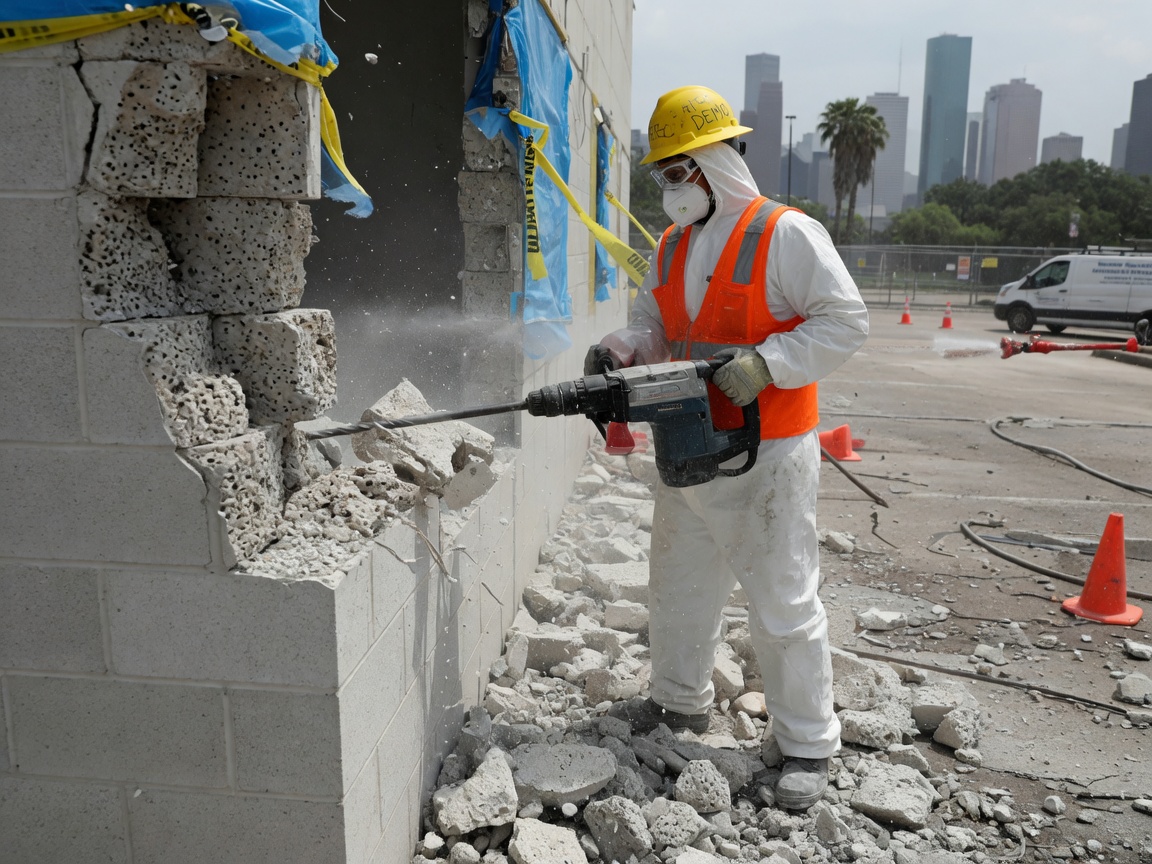
In Houston’s subtropical climate, decomposition fluids quickly saturate porous materials in older housing stock common to the Heights and Midtown. Plaster-and-lath walls and oak subfloors from the 1920s through 1960s allow rapid wicking that standard cleaning cannot reach, requiring full demolition to the studs or joists. Humidity above 70 percent for weeks after an incident also promotes bacterial growth deep inside insulation and carpet padding, especially in single-story bungalows near the Museum of Fine Arts or Minute Maid Park.
Harris County health rules and Houston building codes require removal of all affected porous layers when visible staining or odor persists, with no option for encapsulation. Crews must separate and double-bag materials on-site before transport to permitted medical-waste facilities, avoiding cross-contamination of HVAC returns that run through many River Oaks and Montrose homes. Edge cases include multi-story townhomes in Downtown where fluids migrate through concrete slabs into lower-level units, and properties near Buffalo Bayou where high water tables can re-wet freshly exposed soil.
Technicians test moisture levels at multiple depths before cutting, then use negative-air machines to keep particulates out of adjacent living spaces. In Katy and Sugar Land homes built on clay soils, seasonal expansion and contraction can crack new subfloors if demolition does not account for existing movement joints. All work stops at the first sign of structural compromise so a licensed contractor can evaluate load-bearing members before reconstruction begins.
Technician insight
In Houston, the thing that catches most people out with Porous Material Demolition is how the clay soils and high water table around the Heights let fluids travel laterally under slab-on-grade homes built before 1970, so what looks like a small bedroom stain can require cutting through two rooms to reach dry substrate.
Midtown Bungalow After Extended Decomposition
A single-story 1940s home near Midtown showed staining only on bedroom carpet. Moisture readings revealed saturation had reached the oak subfloor and migrated into the adjacent hallway drywall. Crews removed carpet, padding, and two sections of subfloor, then cut drywall 18 inches past the odor line. All material was bagged on-site and cleared within one day, allowing the owner to begin reconstruction without further odor complaints.
Porous Material Demolition Services We Offer
✓Carpet and Padding Removal
Complete extraction of saturated carpet, underlayment, and tack strips from bedrooms and hallways where decomposition fluids have wicked into the backing.
✓Drywall and Plaster Demolition
Cut-out and disposal of stained drywall or plaster up to 24 inches beyond visible lines in Heights and Midtown bungalows to reach hidden saturation.
✓Subfloor Extraction
Removal of oak or pine subfloor sections down to joists when fluids have penetrated through carpet and padding in older Montrose properties.
✓Insulation Disposal
Safe removal of fiberglass or cellulose insulation contaminated by airborne decomposition particles in attics and wall cavities.
✓Baseboard and Trim Demolition
Detachment and disposal of wooden or MDF baseboards and door casings that have absorbed fluids along wall lines.
Porous Material Demolition Cost in Houston, TX
| Service | Typical Range | What Affects It |
|---|---|---|
| Single-room carpet and padding removal | $650–$1,200 | Depends on room size and whether padding has bonded to subfloor |
| Drywall demolition per wall | $450–$850 | Includes disposal; higher in multi-story Downtown units |
| Subfloor section extraction | $900–$1,800 | Varies with joist access and oak versus pine material |
| Full bedroom suite demolition | $2,400–$4,100 | Includes carpet, drywall, baseboards, and insulation in Heights homes |
Ranges are typical for Houston, TX and confirmed with an exact written quote before any work starts.
How it works
- 1
Site Assessment
Technicians map all visible and hidden saturation using moisture meters and odor tracing in the affected rooms.
- 2
Containment Setup
Negative-air machines and plastic barriers isolate the work zone from the rest of the Houston home.
- 3
Selective Demolition
Porous materials are cut, bagged, and removed in layers until clean substrate is reached.
- 4
Transport and Disposal
Double-bagged waste is logged and hauled to permitted Harris County medical-waste facilities.
- 5
Final Clearance
Visual and odor inspection confirms no residual contamination before barriers are removed.
Pricing
Pricing varies by square footage, number of affected layers, and access constraints typical in older Houston neighborhoods.