
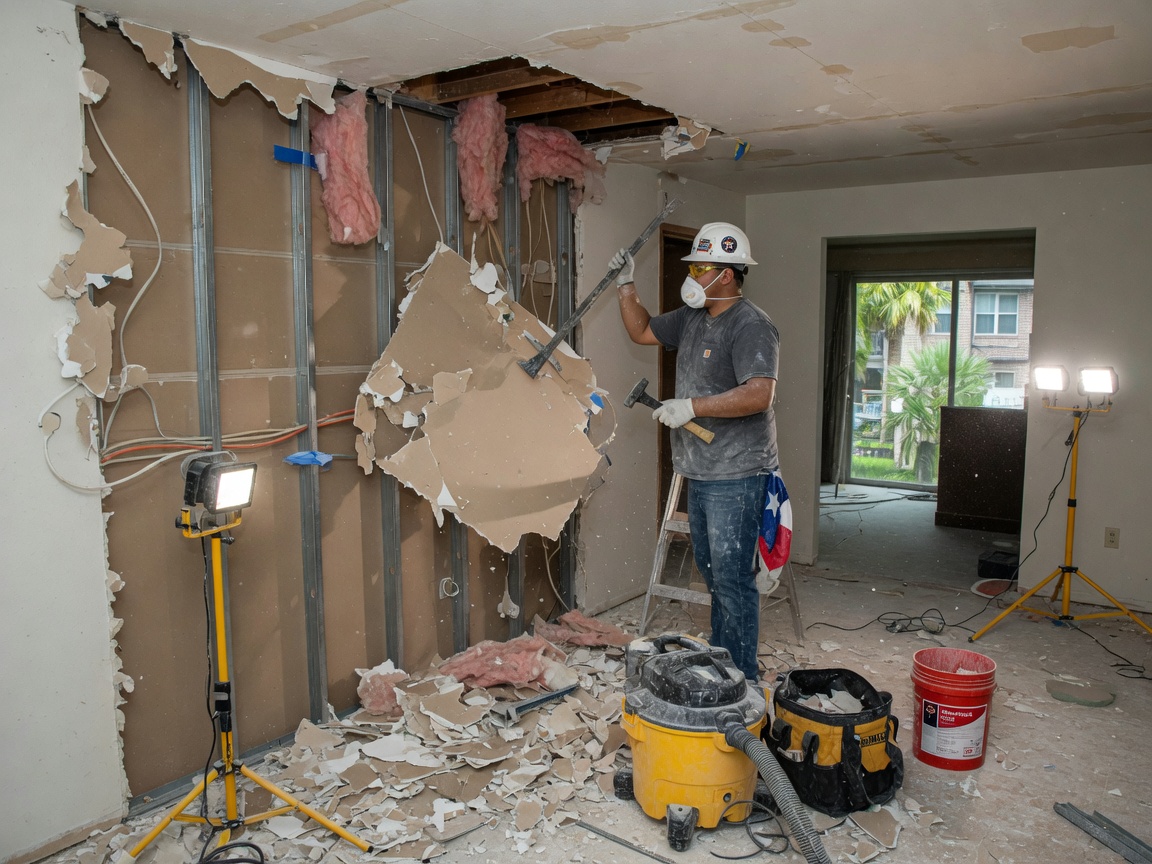
Houston's subtropical climate with hot humid summers drives rapid decomposition and allows odors and fluids to penetrate drywall and insulation quickly in older housing stock common in the Heights and Montrose. Homes built before the 1980s often contain multiple layers of drywall or plaster over lathe that trap biohazards, requiring full removal rather than surface cleaning to prevent lingering odors and mold growth once humidity returns. Harris County regulations on biohazard waste disposal add steps for proper bagging, labeling, and transport that crews must follow on every job.
In neighborhoods like Midtown and River Oaks, tight lot lines and shared walls mean demolition must be contained to avoid affecting adjacent properties during removal. Moisture from the region's frequent rains and high water table can leave subfloors and wall cavities damp, so crews test for hidden saturation before cutting and often discover additional affected sections behind baseboards or in ceiling returns. Work in these conditions requires negative air machines and sealed containment to keep particles from migrating through HVAC systems common in Houston homes.
Downtown high-rises and townhomes present different challenges with thinner modern drywall that still soaks up fluids during extended unattended periods, especially in units without strong ventilation. Crews coordinate with property managers to schedule around building rules while handling larger volumes of waste that must be manifested for transport outside Harris County. Seasonal mild winters allow year-round work but summer heat accelerates off-gassing during demolition, requiring shorter shifts and extra PPE rotation.
Technician insight
In Houston the thing that catches most people out with Drywall Demolition is how fast summer humidity pushes fluids and odors through the paper facing into the gypsum itself, especially in 1950s–1970s Heights and Montrose homes where previous owners added layers instead of replacing walls.
Montrose Bungalow After Extended Unattended Period
Decomposition fluids had wicked upward behind baseboards and into two layers of drywall in a 1960s bungalow. We mapped the saturation, set full containment, removed the affected sections plus insulation, and found additional damage along the exterior wall from prior roof leaks. All waste was manifested and removed same day.
Drywall Demolition Services We Offer
✓Biohazard Drywall Removal
Full removal of contaminated drywall sections after decomposition events to eliminate fluids and odors that standard cleaning cannot reach.
✓Odor Penetrated Wall Demolition
Targeted cutting and disposal of drywall where decomposition odors have migrated into cavities and insulation in humid Houston conditions.
✓Mold Affected Drywall Demolition
Removal of drywall showing secondary mold growth triggered by decomposition moisture in homes across the Heights and Montrose.
✓Multi Layer Drywall Demolition
Stripping older multi-layer walls found in pre-1980s Houston housing where biohazards hide between sheets.
✓Ceiling Drywall Removal
Safe demolition of ceiling drywall contaminated by upward migration of fluids in two-story homes in Midtown and Downtown.
Drywall Demolition Cost in Houston, TX
| Service | Typical Range | What Affects It |
|---|---|---|
| Single room drywall demolition | $800–$1,600 | Depends on square footage and hidden damage discovered during removal |
| Multi-room or hallway sections | $1,400–$3,200 | Increases with older multi-layer walls common in Heights homes |
| Ceiling demolition add-on | $600–$1,200 | Requires extra containment and scaffolding in two-story properties |
Ranges are typical for Houston, TX and confirmed with an exact written quote before any work starts.
How it works
- 1
Site Assessment
Technicians inspect affected rooms, test for hidden saturation, and map all drywall sections requiring removal while documenting access points.
- 2
Containment Setup
Negative air machines and plastic barriers isolate the work area to prevent cross-contamination into unaffected parts of the home.
- 3
Controlled Demolition
Drywall is cut in sections, double-bagged, and removed while monitoring for additional hidden damage behind baseboards or in cavities.
- 4
Waste Transport
Manifested biohazard waste is loaded for proper disposal following Harris County guidelines.
Pricing
Pricing varies by square footage, number of layers, and access difficulty in older Houston homes.