
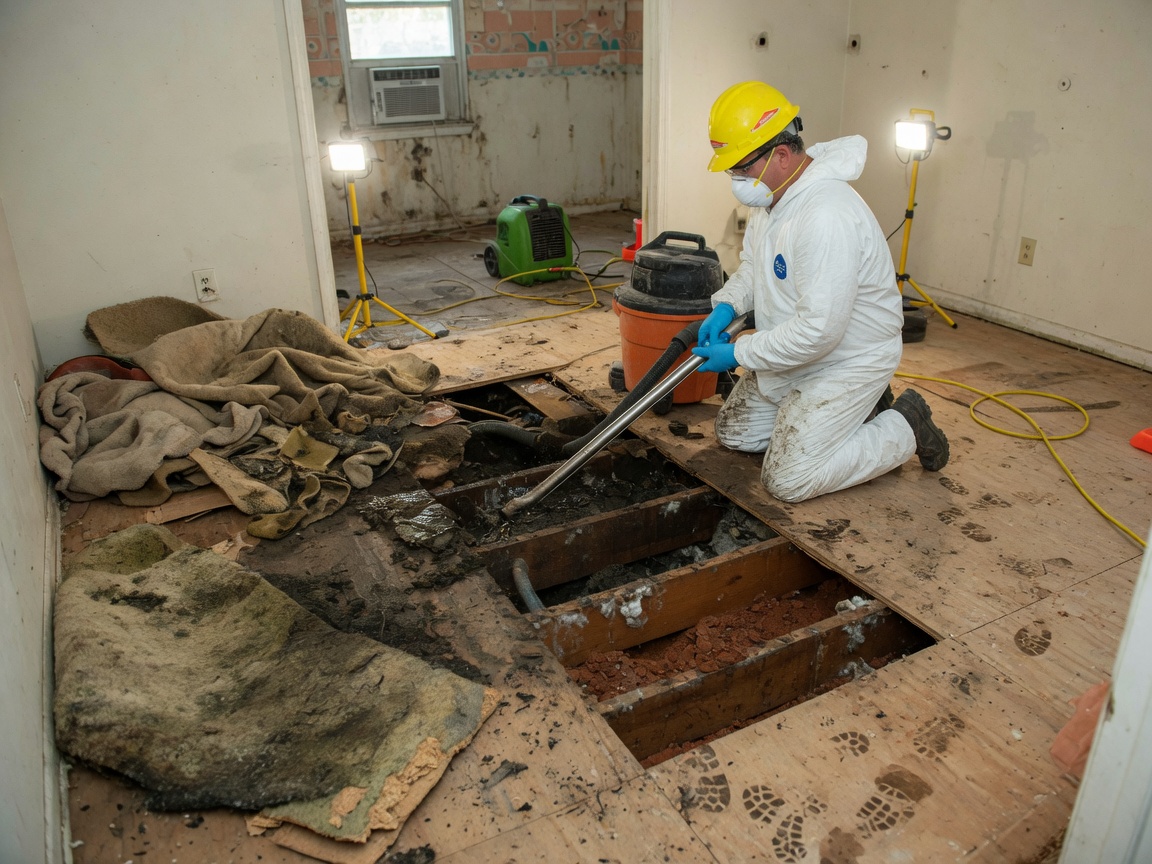
Houston's older housing stock in the Heights and Montrose often features pine subfloors installed before modern vapor barriers. When decomposition fluids reach these surfaces the subtropical humidity allows rapid wicking and bacterial growth that standard cleaning cannot reach. Technicians must cut out saturated sections, treat joists with EPA-registered disinfectants, and install new plywood while maintaining negative air pressure to protect adjacent living spaces.
River Oaks and Midtown properties frequently sit on clay soils that retain moisture after heavy rains. This raises crawl-space humidity and can cause fluids to migrate laterally under flooring. Remediation crews inspect for hidden saturation using moisture meters, remove affected insulation, and apply antimicrobial coatings before reinstalling finished floors. Failure to address lateral migration often leads to recurring odors weeks later.
Downtown high-rises and townhomes near Minute Maid Park present different challenges with concrete slabs and limited access points. Decomposition in these units can pool against slab edges and HVAC returns. Work includes slab etching, application of penetrating sealers, and verification that no residual proteins remain before carpet or tile replacement. All work occurs during posted hours to minimize neighbor disruption.
Technician insight
In Houston the thing that catches most people out with Subfloor Remediation is how the high humidity in Heights and Montrose homes lets fluids travel several feet laterally through old subfloor seams before anyone notices. Homeowners often think wiping the surface is enough, but without cutting back to dry material the odor returns the next time it rains.
Heights Bungalow Subfloor Job
Decomposition fluids had soaked through the dining room floor of a 1920s Heights home. Inspection showed saturation extending four feet into adjacent joists. Crews removed the affected pine, disinfected and sealed the joists, then reinstalled new subflooring before the homeowner's flooring contractor arrived.
Subfloor Remediation Services We Offer
✓Fluid Extraction From Wooden Subfloors
Removes saturated sections of pine or oak subflooring in Heights and Montrose homes where decomposition fluids have wicked into the grain.
✓Joist Disinfection and Sealing
Treats exposed floor joists with hospital-grade disinfectants and applies penetrating sealers to prevent odor re-emergence in humid Houston conditions.
✓Crawl Space Biohazard Removal
Clears contaminated insulation and soil in River Oaks and Sugar Land crawl spaces after fluids migrate through pier-and-beam construction.
✓Concrete Slab Etching and Sealing
Etches and seals porous concrete in Midtown and Downtown units where decomposition has pooled against slab edges and HVAC pathways.
✓Odor Source Elimination Under Flooring
Locates and neutralizes protein residues trapped beneath finished floors in Katy and Pearland properties using targeted enzyme applications.
Subfloor Remediation Cost in Houston, TX
| Service | Typical Range | What Affects It |
|---|---|---|
| Wood subfloor section removal and treatment | $1,800–$4,200 | Varies by square footage and joist exposure in older Heights homes |
| Crawl space soil and insulation remediation | $2,400–$5,500 | Higher in River Oaks due to limited access and clay soil retention |
| Concrete slab etching and sealing | $1,200–$3,100 | Common in Midtown condos; price rises with HVAC integration |
| Full-room subfloor replacement after decomposition | $3,500–$7,800 | Includes multiple rooms when fluids migrate in Montrose bungalows |
Ranges are typical for Houston, TX and confirmed with an exact written quote before any work starts.
How it works
- 1
Site Assessment
Technicians inspect subfloor access points, test moisture levels, and map contamination extent while respecting the property's layout in the specific neighborhood.
- 2
Containment Setup
Negative air machines and plastic barriers isolate the work zone to prevent cross-contamination into living areas or neighboring units.
- 3
Material Removal
Saturated subfloor sections, insulation, and affected soil are removed and placed in biohazard containers for proper transport.
- 4
Treatment And Restoration
Joists and slabs receive disinfection and sealing; new subfloor material is installed and the area is returned to pre-incident condition.
Pricing
Cost depends on square footage affected, access difficulty, and whether concrete or wood subfloors are involved.