
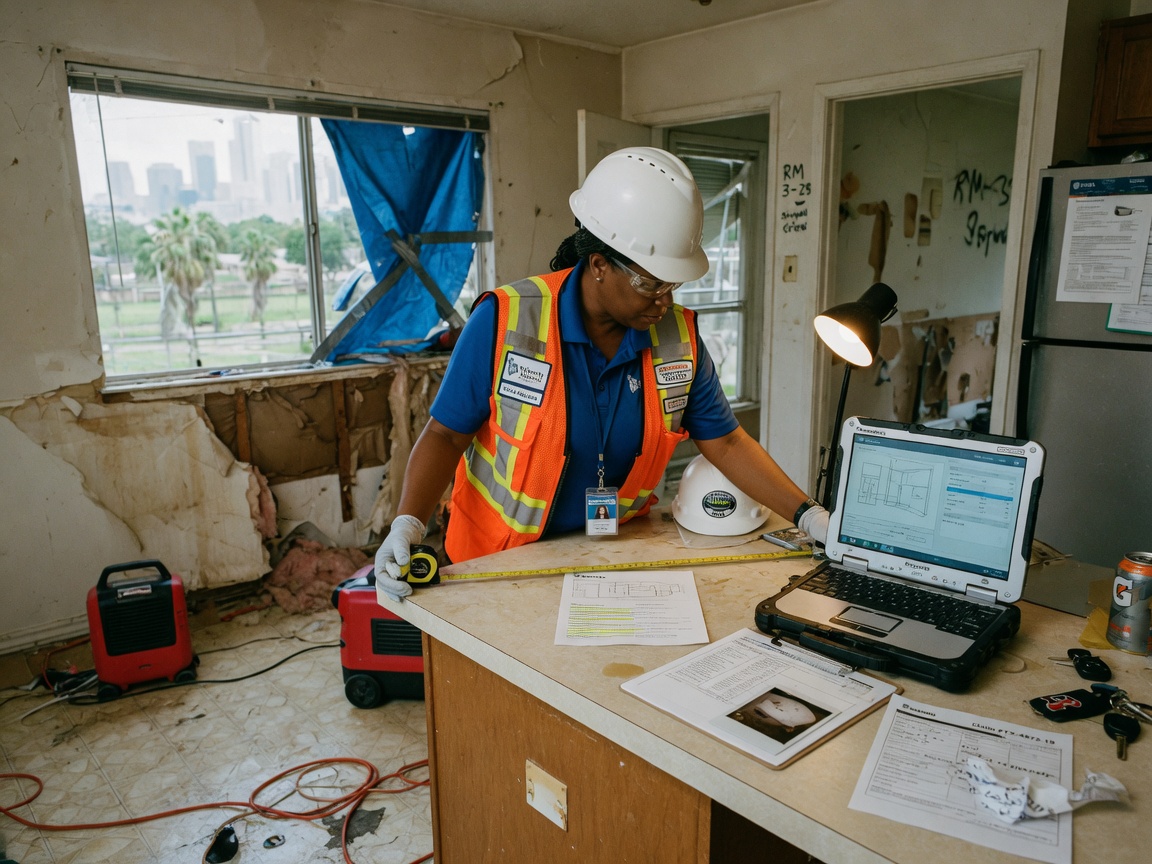
Exotic Biocleanup handles unattended death cleanup calls in Inez, a pocket of older single-family homes and small apartment buildings east of downtown Houston. Crews navigate narrow driveways and carports typical of 1950s–1970s construction while working around mature live oaks and poor drainage that leaves yards soggy after subtropical rains. The same humidity that speeds decomposition also forces extra steps to control odor migration into neighboring properties on streets like Inez Street and adjacent blocks near the East End.
Because Inez sits inside Harris County, technicians coordinate with local authorities on properties that back up to rail lines or sit close to the bayou. Hot, humid summers accelerate fluid breakdown and insect activity, so teams arrive with extra containment supplies and negative-air units sized for the compact floor plans common here. Winter mild spells still require ventilation planning since many homes lack central HVAC that would otherwise help air exchange.
Service extends from Inez into nearby Montrose and Midtown when families request the same crew for related properties. Every job begins with an on-site assessment that accounts for the area’s clay-heavy soil and limited side-yard access before any remediation starts.
Around Inez
We regularly work near:
- 📍Minute Maid Park
- 📍Houston Zoo
- 📍Museum of Fine Arts
- 📍Inez Street
Unattended Death Cleanup in Inez — Local Notes
- •Inez housing stock from the 1950s–70s often features slab-on-grade foundations and carport-only parking, limiting equipment staging and requiring smaller containment setups than newer subdivisions in Katy or Sugar Land.
- •Harris County drainage patterns and bayou proximity mean yards in Inez stay damp longer after rain, increasing slip hazards and extending drying times after biohazard removal.
- •Subtropical humidity combined with older single-pane windows allows odors to travel between closely spaced homes faster than in drier climates, so extra sealing of shared walls is routine.
- •Narrow interior hallways and limited attic access in these older homes require technicians to disassemble furniture on site rather than carry large items out intact.