
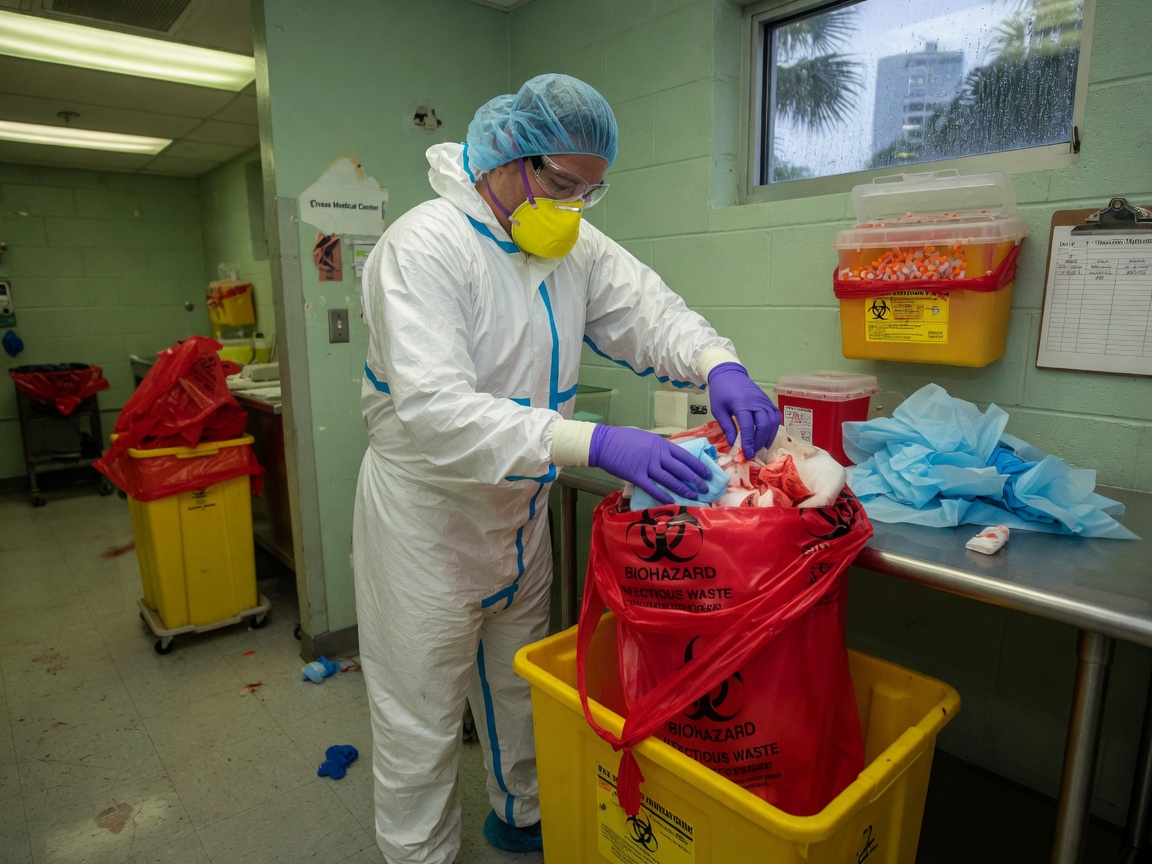
In Houston's subtropical climate, hot humid summers accelerate decomposition fluids, requiring immediate red bagging to prevent migration through older pier-and-beam homes common in the Heights and Montrose. Technicians double-bag saturated carpets, mattresses, and drywall sections using 6-mil biohazard bags rated for Category A pathogens, then seal them with tamper-evident tape before transport to approved Harris County disposal sites. Mild winters extend scene dwell times in River Oaks estates, increasing the volume of materials that must be red-bagged.
Downtown high-rises and Midtown apartments present different constraints, with limited elevator access and shared HVAC systems that can spread odors if bagging is incomplete. Every bag is labeled with contents, date, and origin address per Texas Commission on Environmental Quality guidelines, then staged in leak-proof secondary containers. Crews inspect subflooring and wall cavities in Pearland and Sugar Land ranch homes where moisture from nearby bayous can wick fluids farther than expected.
Katy properties built on clay soils often trap liquids beneath slabs, forcing targeted red bagging of excavated material rather than surface removal alone. All waste streams are tracked with chain-of-custody forms from the scene to final incineration, protecting both the property and downstream handlers from cross-contamination.
Technician insight
In Houston the thing that catches most people out with Biohazard Red Bagging is how quickly humidity in Montrose and Heights crawlspaces turns minor fluid stains into widespread saturation that requires twice the bags once you open the floor.
Midtown Apartment Fluid Migration
A tenant in a Midtown high-rise was found after several days in summer heat. Fluids had wicked through carpet into the concrete subfloor and HVAC return. We red-bagged all saturated carpet sections, sealed the HVAC filters, and removed the affected drywall behind the bed before any odor reached neighboring units.
Biohazard Red Bagging Services We Offer
✓Decomposition Fluid Saturated Material Bagging
Double-bagging of carpets, padding, and subfloor sections contaminated by bodily fluids in humid Houston homes to prevent leakage during transport.
✓Personal Protective Equipment Red Bagging
Collection and sealing of used Tyvek suits, gloves, and respirators from the job site into dedicated biohazard bags for proper disposal.
✓Furniture and Mattress Containment Bagging
Oversized red bagging of sofas, beds, and box springs that have absorbed decomposition fluids in Montrose or Heights properties.
✓Drywall and Insulation Removal Bagging
Cutting and immediate bagging of affected wall sections where fluids have wicked behind surfaces in older Harris County homes.
✓Vehicle and Garage Surface Bagging
Red bagging of trunk liners, seat covers, and garage floor materials after body transport from scenes in Sugar Land or Pearland.
Biohazard Red Bagging Cost in Houston, TX
| Service | Typical Range | What Affects It |
|---|---|---|
| Standard Room Red Bagging | $450–$900 | Increases with fluid migration into subfloors common in older Heights homes |
| Mattress And Furniture Bagging | $300–$650 | Higher in humid summers when saturation extends deeper |
| Vehicle Interior Bagging | $250–$500 | Depends on trunk versus cabin contamination |
| Additional Bag Overage | $75–$150 per bag | Applies when scene volume exceeds initial estimate |
Ranges are typical for Houston, TX and confirmed with an exact written quote before any work starts.
How it works
- 1
Scene Assessment
Identify all biohazard materials and determine bag sizing based on volume and saturation levels.
- 2
Initial Containment
Place materials into primary 6-mil red bags and remove excess air before sealing.
- 3
Secondary Sealing
Insert primary bags into labeled outer biohazard bags and apply tamper-evident tape.
- 4
Transport Staging
Load sealed bags into leak-proof containers for removal to approved disposal facilities.
Pricing
Cost depends on volume of materials, number of bags required, and property access constraints.