
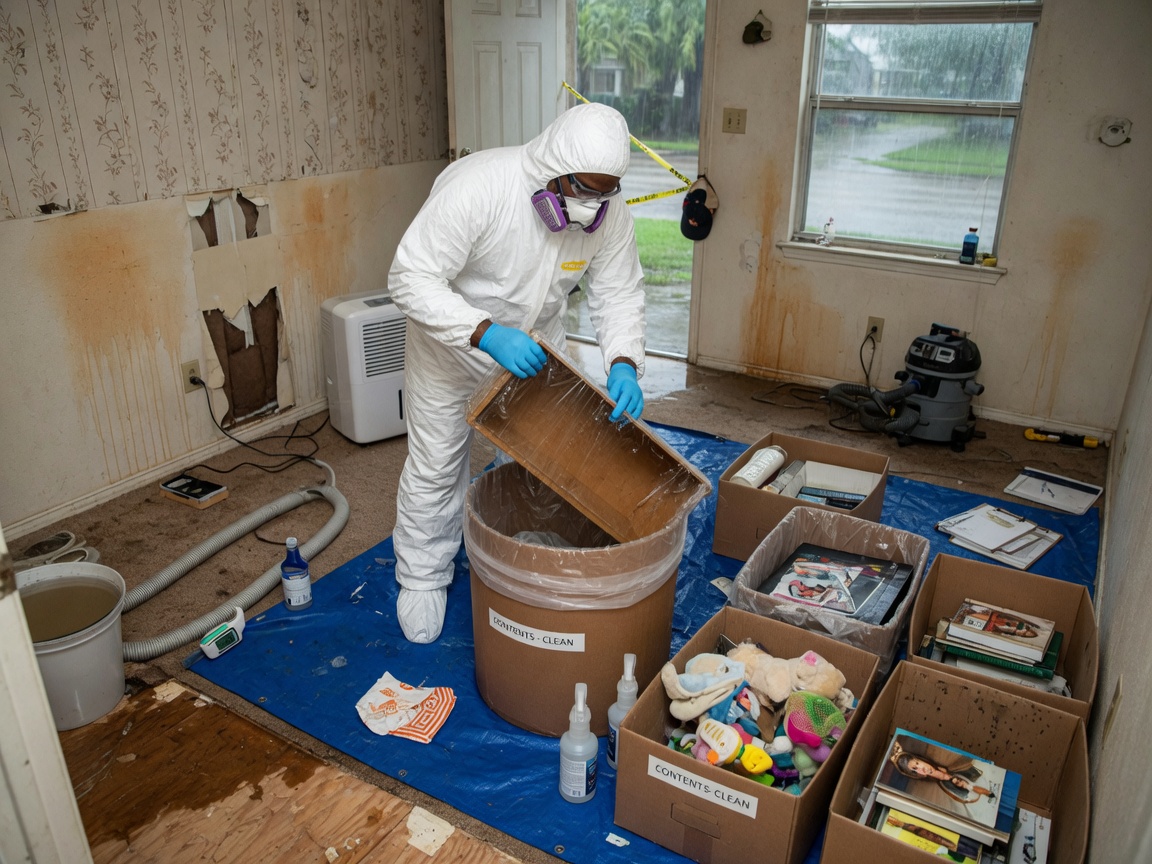
Houston's subtropical climate brings high humidity that accelerates bacterial growth and odor penetration into fabrics, wood, and drywall after an unattended death. In older Heights bungalows and Montrose properties built before 1960, plaster walls and unsealed hardwood floors absorb liquids quickly, requiring targeted extraction rather than surface cleaning. Technicians must account for seasonal rain that raises indoor moisture levels, increasing the risk of secondary mold on items stored in attics or closets.
Harris County disposal rules treat decomposition-affected contents as regulated biohazard waste, so every item removed from a Downtown or Midtown scene must follow chain-of-custody documentation before transport to approved facilities. Electronics, photographs, and documents often survive better than expected but need separate low-humidity drying to prevent warping or corrosion. Homeowners in nearby Sugar Land or Pearland frequently discover that central air systems have spread odors through ductwork, turning a single-room incident into a whole-house contents project.
Porous materials common in River Oaks estates, such as antique rugs and upholstered furniture, demand multiple treatment cycles because residual proteins remain active for weeks in warm weather. Technicians test pH levels on site before applying neutralizers, since alkaline cleaners can set stains on natural fibers. Contents are inventoried room by room so families receive clear records of what was sanitized, what required disposal, and what can be returned after treatment.
Scheduling aligns with standard availability Monday through Friday 8am to 6pm and Saturday 9am to 2pm, allowing coordination with property managers when scenes involve multi-unit buildings in Midtown or Katy.
Technician insight
In Houston the thing that catches most people out with Contents Remediation is how quickly our humid summers push decomposition fluids through the tongue-and-groove pine floors found in pre-1950 Heights and Montrose homes; once liquid reaches the subfloor, one round of cleaning never finishes the job.
Midtown Apartment After Extended Absence
A tenant passed away during a hot spell; fluids had wicked into carpet padding and baseboards. We isolated electronics and documents first, extracted from the hardwood, then ran multiple enzyme cycles and fogging. Items were returned after verification that no odor remained in the restored space.
Contents Remediation Services We Offer
✓Textile and Fabric Sanitization
Removes proteins and odors from clothing, linens, and curtains using enzyme washes followed by controlled drying to prevent mildew in Houston humidity.
✓Electronics and Appliance Decontamination
Cleans circuit boards and casings of decomposition residue while testing for corrosion that develops faster in coastal Harris County moisture.
✓Document and Photo Recovery
Freezes and freeze-dries paper items to halt bacterial spread, then separates pages without tearing for families in older Montrose homes.
✓Furniture and Upholstery Treatment
Extracts fluids from sofas and mattresses common in Heights properties, followed by ozone and thermal fogging to neutralize embedded odors.
✓Jewelry and Valuables Cleaning
Removes organic residue from metal and gem settings using ultrasonic methods that preserve heirlooms found in River Oaks estates.
✓Hard Surface Contents Cleaning
Treats lamps, frames, and decor with hospital-grade disinfectants safe for the varied materials found in Downtown high-rises.
Contents Remediation Cost in Houston, TX
| Service | Typical Range | What Affects It |
|---|---|---|
| Single bedroom contents | $1,200–$2,800 | Higher when antique textiles or electronics are involved |
| Living room set treatment | $900–$2,100 | Depends on upholstery saturation and odor migration |
| Document and photo recovery | $450–$1,100 | Varies with freeze-drying volume and page count |
| Whole-house contents project | $4,500–$9,500 | Common when HVAC has circulated odors through older ductwork |
Ranges are typical for Houston, TX and confirmed with an exact written quote before any work starts.
How it works
- 1
Initial Assessment
Inventory contents room by room while noting humidity damage typical after Houston summers.
- 2
Segregation and Removal
Separate salvageable items from biohazard waste following Harris County transport rules.
- 3
Deep Cleaning
Apply enzyme treatments and neutralizers suited to subtropical conditions.
- 4
Odor Neutralization
Use thermal fogging and air scrubbing to reach porous materials in older housing stock.
- 5
Return and Documentation
Pack cleaned items with itemized reports for owners in Katy or Pearland.
Pricing
Costs depend on volume, material types, and access; quotes provided during assessment. Available Mon–Fri 8am–6pm, Sat 9am–2pm.