
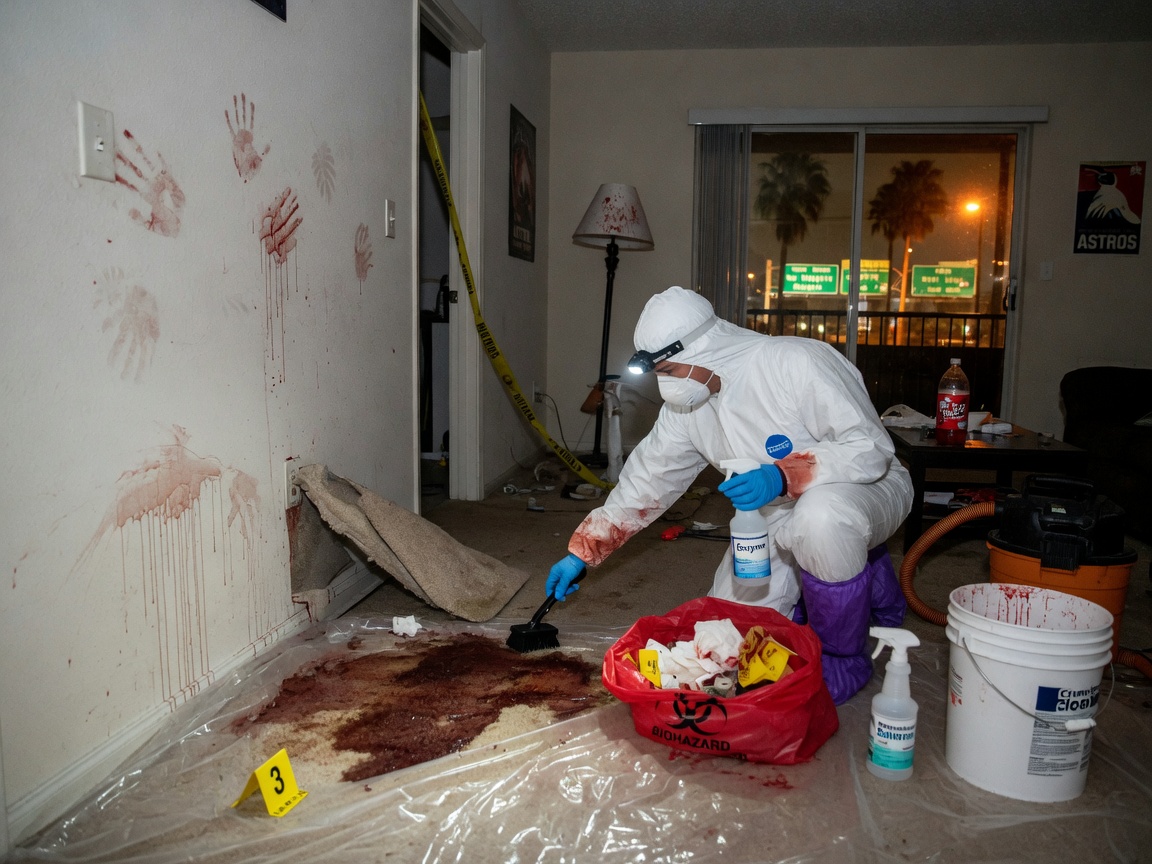
Houston's older housing stock in the Heights and Montrose features raised pier-and-beam foundations and original hardwood floors that readily absorb decomposition fluids, requiring full subfloor removal rather than surface cleaning when humidity levels stay elevated year-round. Subtropical summers accelerate bacterial growth and odor migration through plaster walls, while mild winters allow slower but persistent seepage into soil under slab homes common in Midtown and Downtown. Technicians must account for poor drainage in River Oaks estates where clay soils trap moisture, extending drying times after enzymatic treatment.
Edge cases frequently involve multi-story townhomes near the Museum of Fine Arts where vertical fluid migration reaches lower levels through HVAC returns, demanding negative-air containment to prevent cross-contamination. Harris County regulations require proper documentation for any regulated medical waste generated during decomposition cleanup, and crews coordinate disposal through permitted transporters rather than standard landfill routes. In Pearland and Sugar Land newer builds, vinyl plank flooring often conceals plywood underlayment that must be cut out in sections to eliminate hidden saturation.
Mold risk rises sharply when jobs occur during peak summer humidity, so dehumidifiers run continuously alongside HEPA air scrubbers to keep relative humidity below 50 percent during the sanitization phase. Crews carry extra PPE layers for properties near Space Center Houston where older insulation contains asbestos, requiring licensed abatement partners before biohazard work begins.
Technician insight
In Houston the thing that catches most people out with Crime Scene Cleanup is how quickly subtropical humidity lets decomposition odors travel through the plaster and into the attic space of 1920s Heights homes during even mild winters, forcing extra removal work that slab homes in Sugar Land rarely need.
Montrose Bungalow Decomposition
Fluids from an unattended death had wicked into original pine flooring and traveled under baseboards into two adjacent rooms. We removed the saturated subfloor sections, treated the pier-and-beam crawlspace with enzymes, and ran dehumidifiers for 48 hours to counter summer humidity. The home passed clearance testing and was returned ready for estate contractors.
Crime Scene Cleanup Services We Offer
✓Unattended Death Biohazard Removal
Complete removal of fluids and tissue from wood and concrete substrates in Houston single-family homes, followed by antimicrobial application to prevent secondary bacterial growth.
✓Decomposition Odor Elimination
Targeted treatment of porous materials in Heights bungalows and Montrose apartments using industrial oxidizers to neutralize odors trapped in subfloors and wall cavities.
✓Blood Stain Remediation
Extraction and sanitization of dried blood from carpet, tile, and hardwood in River Oaks and Midtown properties without spreading pathogens to unaffected rooms.
✓Trauma Scene Sanitization
Full surface and air decontamination after violent incidents, using EPA-registered disinfectants proven effective against bloodborne pathogens common in Harris County homes.
✓Vehicle Biohazard Cleanup
Interior remediation of passenger vehicles and trucks in Katy and Sugar Land driveways, including seat removal and ozone treatment for persistent odors.
Crime Scene Cleanup Cost in Houston, TX
| Service | Typical Range | What Affects It |
|---|---|---|
| Single Room Decomposition Cleanup | $1,200–$2,800 | Higher when subfloor or wall cavities require removal in older Heights homes. |
| Multi-Room Odor And Fluid Remediation | $2,500–$5,500 | Varies with vertical migration through HVAC systems in Midtown townhomes. |
| Vehicle Interior Biohazard Service | $450–$950 | Includes ozone treatment; price rises with heavy saturation of carpet and seats. |
| Post-Remediation Verification Testing | $150–$300 | Optional ATP and moisture meter documentation for insurance or estate needs. |
Ranges are typical for Houston, TX and confirmed with an exact written quote before any work starts.
How it works
- 1
Scene Assessment
Technicians evaluate fluid migration paths through Houston's typical pier-and-beam or slab foundations while documenting all affected materials.
- 2
Containment Setup
Negative-air machines and physical barriers isolate the work zone to protect adjacent living spaces in multi-unit buildings.
- 3
Removal And Disposal
Saturated flooring, drywall, and insulation are cut out and packaged for permitted medical-waste transport out of Harris County.
- 4
Sanitization And Drying
Enzymatic cleaners and HEPA scrubbing run until surfaces pass ATP testing and moisture meters read within acceptable ranges.
- 5
Final Clearance
Property is returned with written verification that biohazards have been eliminated and odors are no longer detectable.
Pricing
Costs depend on square footage affected, construction type, and access; ranges reflect typical Houston single-family and townhome jobs.