
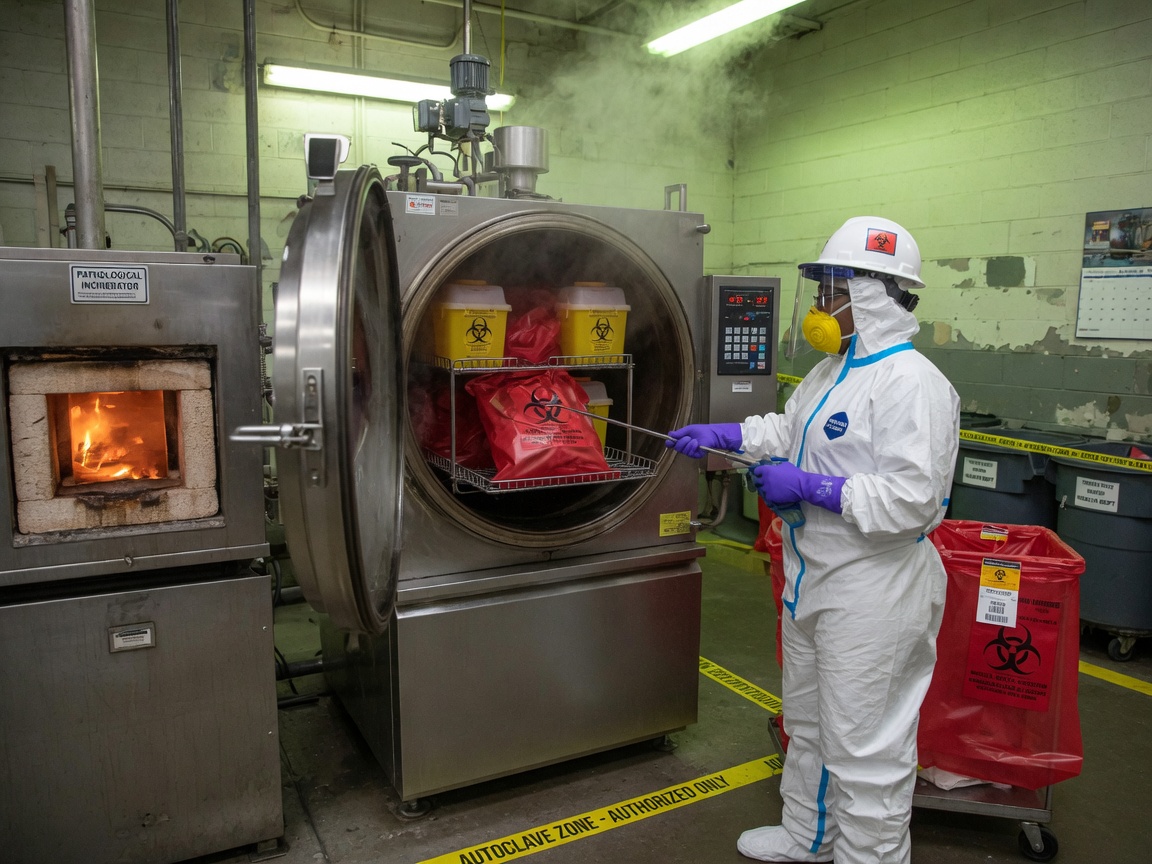
Houston's subtropical climate drives rapid bacterial growth in decomposition cases, especially during humid summers when temperatures push materials past safe handling thresholds faster than in drier regions. In older housing stock common to the Heights and Montrose, tight access points and multi-story layouts often require specialized containment before transport to approved facilities. Harris County regulations mandate documented chain of custody for all regulated waste, and failure to follow proper autoclave or incineration protocols can trigger additional environmental reviews. We coordinate directly with permitted processors serving Katy, Sugar Land, and Pearland to ensure materials from Downtown or Midtown scenes meet state disposal standards without delay.
Autoclaving works best for contained soft tissue and fluid-soaked items that can withstand steam sterilization, while incineration handles larger volumes or materials that cannot be fully decontaminated on site. River Oaks properties with extensive landscaping sometimes present drainage concerns that affect how we stage waste for off-site treatment. In Midtown apartments and older Downtown buildings, limited elevator access and shared corridors require extra sealing steps to prevent cross-contamination during removal. We track seasonal humidity spikes that increase odor migration through HVAC systems, adjusting containment methods accordingly before any waste leaves the property.
Legal documentation includes manifests that reference specific treatment methods and final disposition locations, required for any Harris County case involving unattended death remediation. Nearby cities like Pearland and Sugar Land share similar subtropical conditions that accelerate decomposition in unconditioned spaces, so timing of waste processing becomes critical. We avoid generic approaches because soil conditions near the Houston Zoo or Museum of Fine Arts area can differ from those in the Heights, affecting how we manage potential groundwater exposure during staging. Every job includes verification that the chosen method complies with current state rules for biohazardous waste.
Edge cases arise when decomposition involves mixed materials such as furniture or personal effects that cannot enter standard autoclave cycles. In these situations we separate items for targeted incineration at permitted facilities serving the greater Houston region. Practitioners must account for the mild winters that allow year-round work but also mean fewer natural pauses in bacterial activity compared to northern climates.
Technician insight
In Houston the thing that catches most people out with Legal Incineration / Autoclaving is how quickly subtropical humidity turns contained waste into a transport problem in older Heights and Montrose homes with narrow stairwells and no direct exterior access.
Decomposition Waste From Midtown Apartment
A prolonged unattended death in a Midtown high-rise left saturated furnishings and flooring that could not be fully decontaminated on site. We segregated items for autoclave treatment versus incineration, then transported everything under manifest to a permitted facility serving Harris County. Final documentation confirmed proper disposition before we returned the unit to the owner.
Legal Incineration / Autoclaving Services We Offer
✓Biohazardous Waste Incineration
High-temperature incineration of contaminated materials from decomposition scenes that cannot be autoclaved, ensuring complete destruction per Harris County requirements.
✓Autoclave Sterilization Services
Steam sterilization of contained soft waste and fluid-soaked items using validated cycles before final disposal in permitted Houston facilities.
✓Regulated Medical Waste Transport
Secure transport of treated or untreated waste from Montrose, Heights, or River Oaks properties to approved incineration or autoclave locations.
✓Decomposition Material Segregation
On-site separation of items requiring different treatment methods to meet legal standards for Houston-area unattended death cases.
✓Manifest Documentation and Tracking
Preparation of required chain-of-custody paperwork for every load leaving a Harris County property bound for legal incineration or autoclaving.
✓Post-Treatment Verification
Confirmation that all processed materials from Sugar Land, Katy, or Pearland jobs meet state disposal criteria before release.
Legal Incineration / Autoclaving Cost in Houston, TX
| Service | Typical Range | What Affects It |
|---|---|---|
| Small volume autoclave load | $450–$850 | Increases with fluid saturation or mixed materials from older Heights homes. |
| Large volume incineration | $1,200–$2,800 | Depends on total weight and access challenges in River Oaks or Downtown buildings. |
| Manifest and documentation package | $150–$300 | Required for every Harris County job regardless of neighborhood. |
| Transport from Katy or Sugar Land | $200–$450 | Distance and timing affect cost during humid summer months. |
Ranges are typical for Houston, TX and confirmed with an exact written quote before any work starts.
How it works
- 1
Initial Assessment
Evaluate the volume and type of biohazardous materials at the Houston property and determine whether autoclaving or incineration is the appropriate legal method.
- 2
Containment And Segregation
Package and separate waste streams on site in Montrose, Midtown, or Heights locations to prevent cross-contamination during transport.
- 3
Transport To Permitted Facility
Move materials under documented chain of custody to an approved autoclave or incinerator serving Harris County and surrounding areas.
- 4
Treatment Execution
Complete sterilization or destruction according to state protocols and obtain final disposition records.
- 5
Documentation Handover
Provide the property owner with all required manifests and verification for their records.
Pricing
Pricing varies by volume, material type, and whether autoclaving or incineration is required.