
2026-08-19 · Thomas Rivera
Factors That Influence Unattended Death Cleanup Costs in Harris County
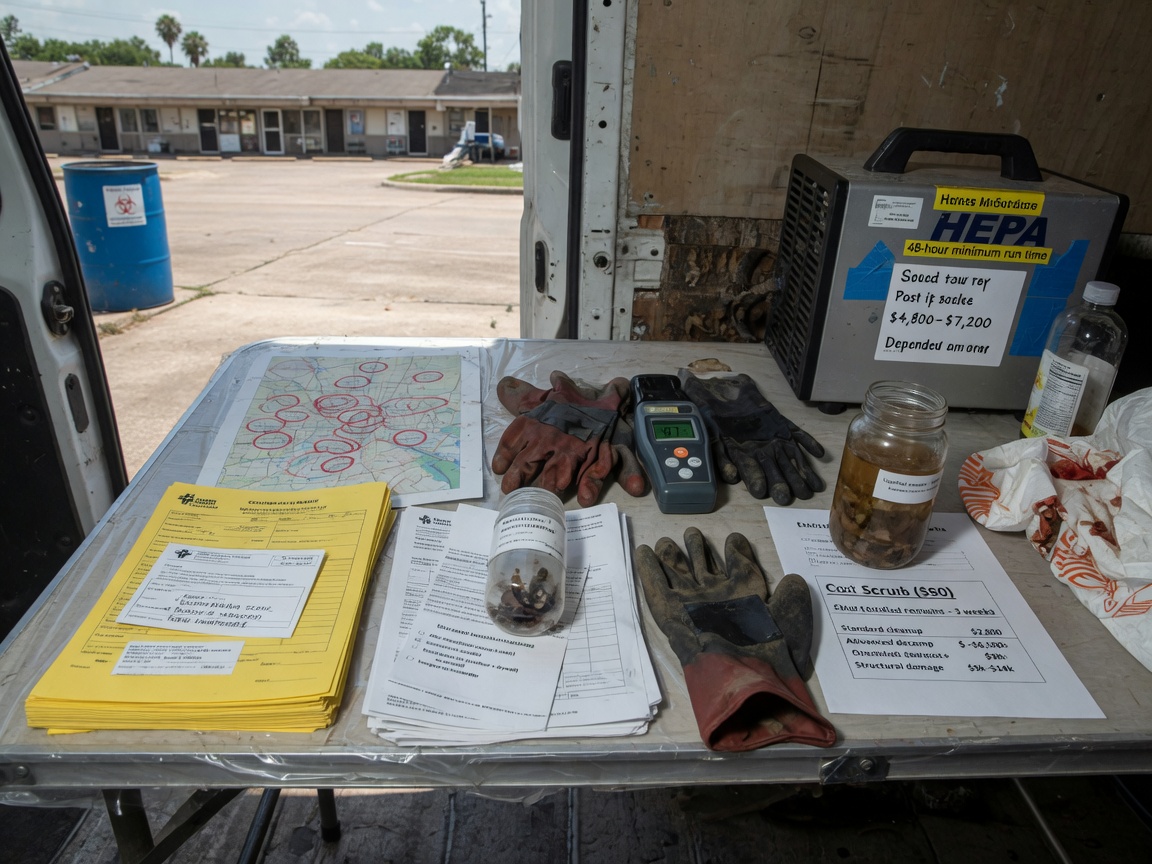
Unattended death cleanup costs in Harris County scale with the volume of porous materials penetrated, the length of time fluids have soaked into subfloors, and the added labor required by Houston's subtropical humidity that speeds decomposition even in mild winters.
Property Size and Affected Materials
Larger square footage or multi-story layouts increase the amount of drywall, carpet, and subfloor that must be removed. In older Heights bungalows built before 1950, hardwood floors and plaster walls absorb fluids deeper than newer drywall, requiring full porous material demolition to stop odor migration. Midtown apartments with concrete slabs limit vertical spread but demand more surface grinding. River Oaks estates often involve multiple rooms plus HVAC returns that pull particulates through ductwork. Each additional linear foot of baseboard or square foot of flooring adds measurable time for physical fluid removal and subsequent ATP bioluminescence testing to verify clearance. Nearby cities such as Katy and Sugar Land show similar patterns in ranch-style homes where slab-on-grade construction still leaves perimeter soils contaminated after heavy rains.
Houston Humidity and Seasonal Effects
Harris County's subtropical climate keeps relative humidity above 70 percent for much of the year, which accelerates bacterial growth and fluid liquefaction within 48 to 72 hours. Summer heat in Downtown high-rises forces crews to work in shorter shifts while maintaining negative air, raising labor hours. Winter months in Montrose and Greater Heights allow slightly slower decomposition, yet mild temperatures still permit ongoing off-gassing if windows remain closed. Properties near the Houston Zoo or Museum of Fine Arts frequently sit on clay-heavy soils that retain moisture, pulling fluids downward into crawl spaces. This moisture retention extends drying times after subfloor remediation and often requires hydroxyl ozone air scrubbing to treat residual vapors. The linked post on how Houston humidity affects decomposition cleanup timelines details daily progression rates observed in local casework.
Access, Location, and Scope Variables
Narrow lots in the Heights or tight parking in Midtown limit equipment staging and increase setup time. Downtown high-rises require freight-elevator coordination and after-hours scheduling that compounds crew costs. Pearland and Clear Lake homes with slab foundations may need exterior trenching when fluids migrate under patios. Scope expands when cross-contamination reaches adjacent rooms or when contents must be inventoried for contents remediation. Insurance adjusters using Xactimate insurance estimation frequently adjust line items upward for these access constraints. Readers facing an incident can review what to expect after an unattended death in a Houston residence for a step-by-step overview of documentation and notification requirements typical in Harris County.
Additional Service Requirements
When fluids reach HVAC systems or when odors persist after initial cleaning, HVAC system decontamination and thermal fogging become necessary line items. Legal transport of biohazard waste to approved facilities in accordance with TCEQ rules adds flat fees that vary by weight. Properties requiring drywall demolition beyond the immediate incident room increase both material disposal volume and restoration coordination. Each of these variables is documented on-site before work begins so owners receive transparent ranges rather than surprise invoices.