
2026-08-19 · Thomas Rivera
What to Expect After an Unattended Death in a Houston Residence
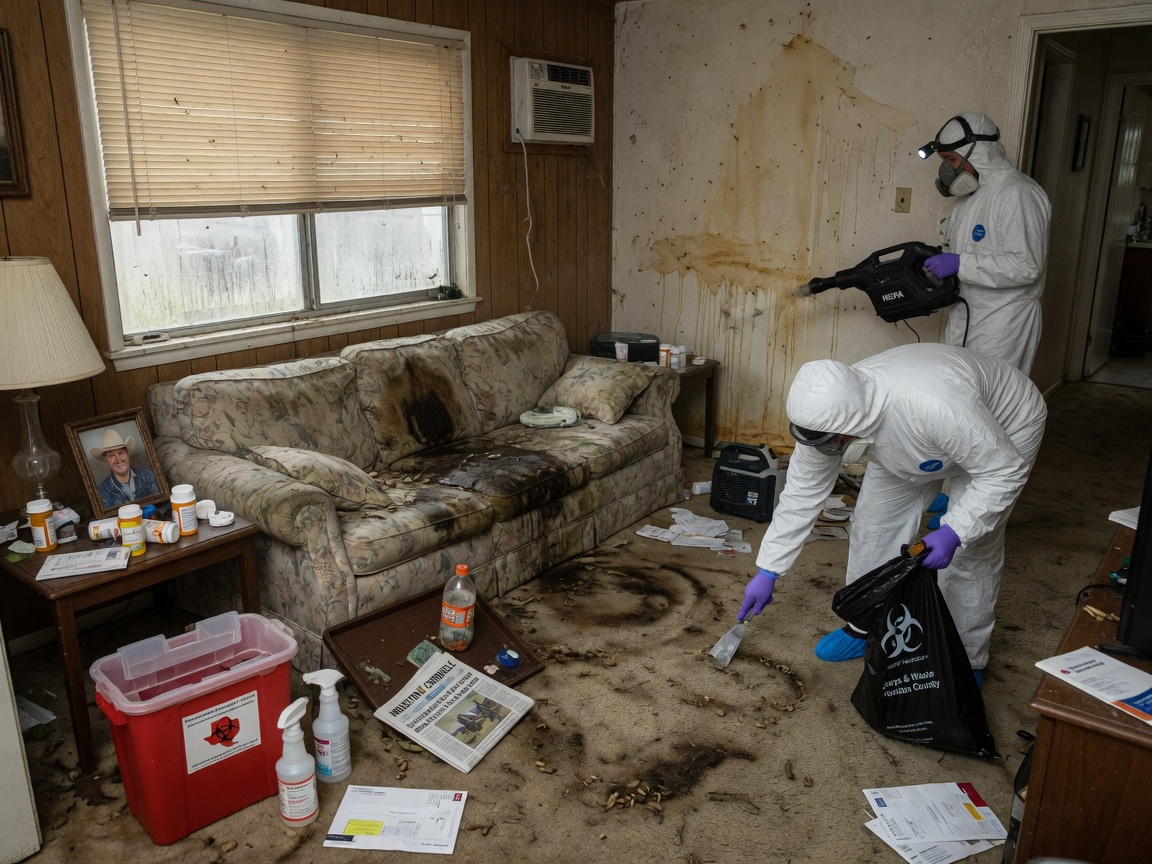
After an unattended death in a Houston residence, expect initial biohazard assessment and physical fluid removal to start within 24-48 hours once authorities release the scene, with full remediation often spanning 4-10 days depending on the decomposition stage and property specifics in Harris County.
Immediate Biohazard Concerns in Houston Homes
Houston's older housing stock in neighborhoods such as Montrose, the Heights, and Midtown frequently features original hardwood floors, plaster walls, and slab foundations from the 1940s-1970s that trap fluids quickly. Decomposition releases blood, purge fluids, and tissue that seep into porous materials within hours, especially in single-story bungalows common in River Oaks and Downtown. Professionals begin by isolating affected zones to prevent cross-contamination into HVAC systems or adjacent rooms. In humid conditions, odors intensify fast, prompting immediate ventilation and containment. Residents or property managers should avoid entering until cleared, as airborne pathogens and bacteria pose real risks in enclosed spaces typical of these areas.
How Houston's Subtropical Climate Changes the Job
The region's hot humid summers and mild winters accelerate bacterial growth and tissue breakdown compared to drier climates, often shortening safe handling windows by several days. In summer, temperatures above 90°F combined with 80%+ humidity in homes without consistent AC can push advanced decomposition within 48-72 hours, saturating carpets and subfloors in properties near the Houston Zoo or Museum of Fine Arts. Mild winters still allow moisture retention in soil around foundations, complicating outdoor-adjacent cleanups in places like Pearland or Katy. This climate reality means crews prioritize rapid extraction and drying to limit mold secondary damage. How Houston Humidity Affects Decomposition Cleanup Timelines details these seasonal effects further for local homeowners.
Challenges with Porous Materials and Subfloors
Many Houston residences in Greater Heights and Midtown have layered flooring over concrete slabs where fluids migrate deep, requiring targeted demolition rather than surface cleaning alone. Porous material demolition removes saturated drywall, insulation, and baseboards while subfloor remediation addresses hidden saturation that standard methods miss. In two-story homes common near Minute Maid Park, gravity pulls fluids downward, extending affected square footage. Crews document every layer removed for insurance purposes using Xactimate estimates. These steps prevent long-term odor return and structural issues in the county's variable soil conditions.
Air Quality and Final Verification Steps
After structural work, thermal fogging and hydroxyl/ozone air scrubbing neutralize remaining odors and particulates that linger in older ductwork throughout Harris County properties. ATP bioluminescence testing confirms surface cleanliness before reassembly, a critical step when families plan to reoccupy quickly. In areas like Sugar Land with newer builds, HVAC decontamination may still be needed if central systems circulated bioaerosols. Final walkthroughs include a certificate of sanity documenting all completed phases.
Practical Next Steps for Property Owners
Contact remediation teams available Mon–Fri 8am–6pm and Sat 9am–2pm to schedule an on-site evaluation. Review related guidance on Factors That Influence Unattended Death Cleanup Costs in Harris County to understand variables like square footage and material types. Focus remains on thorough, documented work that restores habitability without shortcuts.