
2026-08-19 · Thomas Rivera
How Houston Humidity Affects Decomposition Cleanup Timelines
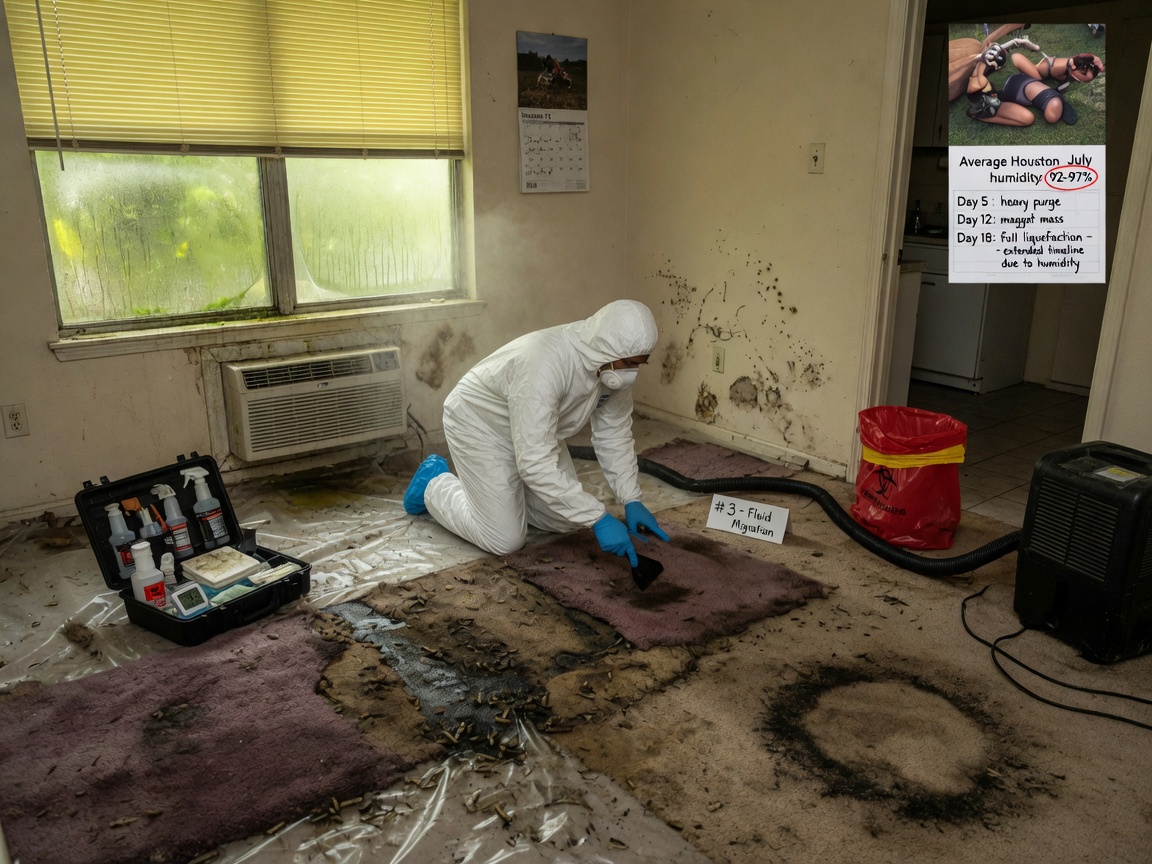
Houston humidity shortens decomposition cleanup timelines to 48-72 hours for initial fluid stabilization in most Harris County cases, compared to 5-7 days in drier regions, because high moisture levels fuel rapid bacterial growth on remains and surrounding materials.
Humidity's Direct Impact on Bacterial Growth Rates
Subtropical conditions with hot humid summers keep relative humidity above 70 percent for months, allowing microbes to multiply faster on organic matter in older wood-frame homes common in Greater Heights and Montrose. This means fluids penetrate deeper into subfloors within the first day, requiring crews to prioritize physical fluid removal before odors migrate through HVAC systems. In River Oaks properties with thicker insulation, trapped moisture extends the active decomposition phase by an extra 24 hours even after the body is removed. Mild winters do little to slow the process because temperatures rarely drop low enough to inhibit bacteria for long. Technicians track these shifts daily because a single extra day of exposure can double the volume of affected drywall and carpet that must come out.
How Local Housing Stock Changes the Timeline
Pre-1970 homes in Downtown and Midtown often feature original pine flooring and plaster walls that absorb fluids quickly under humid conditions, forcing earlier decisions on porous material demolition to prevent mold colonies from forming alongside biohazards. Newer builds in nearby Sugar Land or Pearland use engineered flooring that resists initial wicking but still traps moisture beneath, extending subfloor remediation by 12-24 hours once humidity drives condensation. Crews working in Katy or Sugar Land note that slab-on-grade foundations hold ground moisture longer after heavy rains, which compounds the decomposition rate when an unattended death occurs during summer. These material differences mean every job starts with moisture meter readings to set accurate day-by-day schedules rather than generic estimates.
Seasonal Patterns That Compress or Extend Work Windows
Summer months push timelines tighter because afternoon thunderstorms add ambient moisture that keeps surfaces damp overnight, delaying safe re-entry for ATP bioluminescence testing until readings drop below thresholds. Winter jobs in the same neighborhoods allow slightly longer windows before full remediation because lower temperatures slow odor production, yet the mild conditions never fully halt bacterial action. Property owners in the Heights often see crews finish primary cleaning in three days during December versus two days in August when heat and humidity combine. Planning around these patterns helps families coordinate with insurance adjusters without unnecessary delays.
For readers facing this situation, the article What to Expect After an Unattended Death in a Houston Residence outlines the full sequence, while Factors That Influence Unattended Death Cleanup Costs in Harris County details how humidity-driven scope changes affect pricing. When fluids have reached subfloors, Subfloor Remediation and Physical Fluid Removal become the critical first steps to keep the overall project on the shortest possible schedule.