
2026-10-08 · Thomas Rivera
How to clean up after an unattended death?
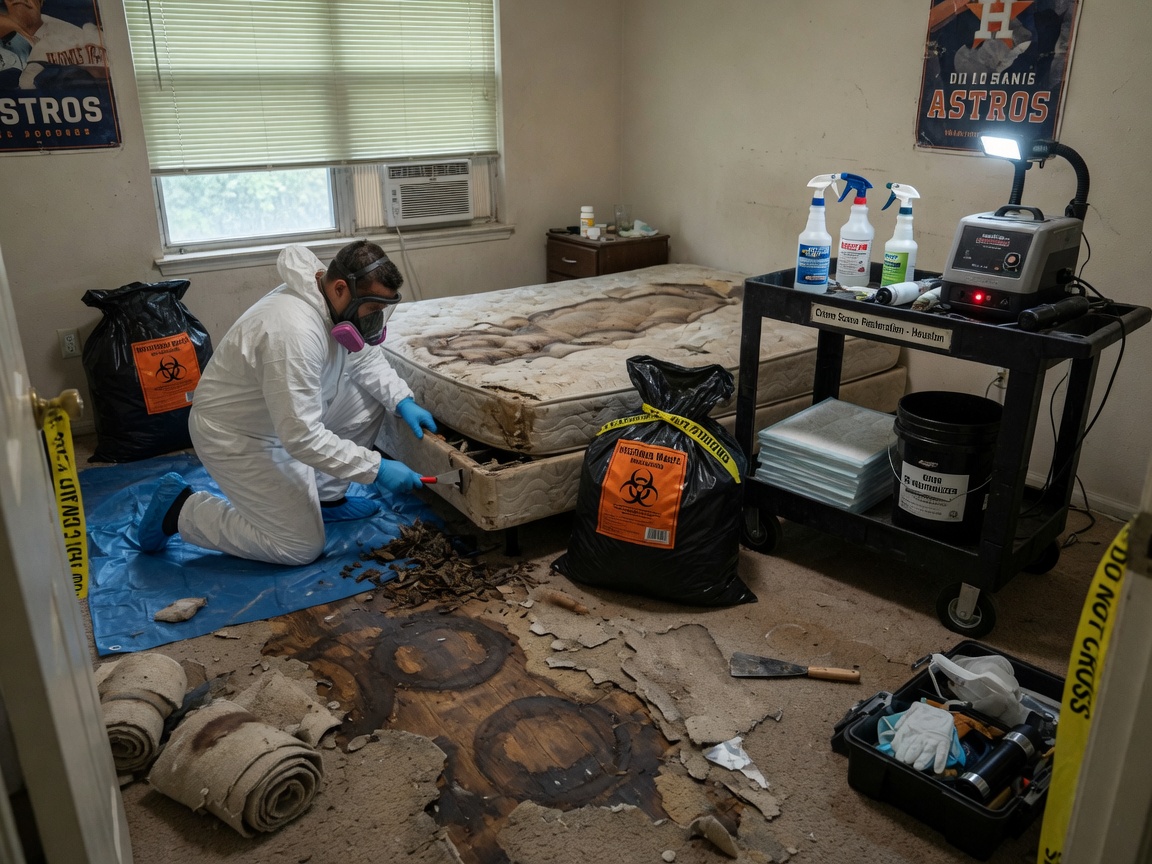
Cleaning up after an unattended death starts with securing the scene, removing all biological fluids and decomposed tissue, demolishing porous materials, and applying EPA List N disinfectants, a process that usually spans 24 to 72 hours in a typical Harris County residence before clearance testing.
Safety and Scene Assessment
Professionals begin by donning full PPE including respirators, Tyvek suits, and double gloves to protect against bloodborne pathogens and bacteria from decomposition. In Houston's subtropical climate, hot humid summers accelerate bacterial growth, so assessment must account for rapid odor spread through HVAC systems in single-story ranch homes common in the Heights and Midtown. Teams evaluate the extent of fluid migration into carpet pads, subfloors, and wall cavities while documenting for insurance. This initial walkthrough prevents cross-contamination to unaffected rooms. Residents in River Oaks or Downtown high-rises face different challenges due to concrete construction that can trap moisture longer than wood-frame homes in Pearland or Katy.
Physical Fluid Removal
Physical fluid removal forms the core of any unattended death remediation because liquefied tissues and purge fluids seep into every porous surface within days. Technicians use absorbents, HEPA vacuums, and extraction tools to lift visible matter without aerosolizing particles. In humid Houston summers, these fluids break down faster, requiring immediate action to avoid deeper penetration into hardwood floors found in many Montrose properties. All collected waste goes into biohazard red bags for compliant transport. This step directly reduces the volume of material needing later demolition and lowers the risk of lingering odors that can permeate entire homes in older neighborhoods like Greater Heights.
Porous Material Demolition
Once fluids are contained, porous material demolition removes carpet, padding, drywall, and insulation that cannot be salvaged. Crews cut out sections at least 12 inches beyond visible staining to capture hidden contamination. Houston's mild winters allow year-round work, yet high summer humidity often forces extra drying time with air movers before new materials can be installed. Homes in the Heights built before 1970 frequently contain plaster walls that crumble differently than modern drywall, changing the scope on site. All debris is double-bagged and prepared for legal incineration to meet Harris County disposal rules.
Subfloor Remediation
Subfloor remediation addresses plywood or particleboard that has absorbed fluids and begun to warp or delaminate. In many Sugar Land and Clear Lake properties with slab-on-grade construction, technicians sand or treat concrete after removing wood layers. This prevents future odor return when humidity levels rise again. The process includes applying antimicrobial sealers once the substrate tests clean. Older homes in Montrose may require sistering joists if prolonged exposure has caused structural softening, a detail discovered only after demolition begins.
Odor Control and Air Scrubbing
Houston's subtropical humidity makes odor molecules bind to surfaces and travel through ductwork more readily than in drier climates. Thermal fogging and hydroxyl ozone air scrubbing neutralize volatile organic compounds left after decomposition. Technicians run equipment for 24 to 48 hours while monitoring with ATP bioluminescence testing to confirm surface cleanliness. Linking to How Houston Humidity Affects Decomposition Cleanup Timelines explains why timelines stretch in summer months. Final clearance also includes HVAC system decontamination when odors have migrated through returns.
Verification and Clearance
The last phase uses ATP testing and visual inspection to issue a certificate of sanity. This documentation satisfies landlords, insurers, and family members that the property meets health standards. For residents in Downtown or Museum District condos, the process may involve coordinating with building management for elevator access and after-hours work. Families in nearby Pearland or Katy often request the same level of detail even when travel adds time. Contact Exotic Biocleanup at 1240 Clear Lake City Blvd, Houston, TX 77062 during Mon–Fri 8am–6pm or Sat 9am–2pm for scene-specific guidance.